
PETG vs. ABS vs. PLA: Which 3D Printing Filament Is Best for Your Project?
Choosing the right 3D printing filament is one of the most important decisions for achieving high-quality prints. Among the most popular materials, PLA, PETG, and ABS are widely used by hobbyists, makers, and professional users.
Each filament has its own advantages and limitations. PLA is known for its ease of printing, PETG offers a balance of strength and durability, while ABS provides excellent heat resistance and mechanical performance.
So, PLA vs PETG vs ABS — which filament should you choose?
This guide will compare these three materials based on strength, printability, durability, temperature resistance, applications, and overall performance.
PLA vs PETG vs ABS: Quick Comparison
| Feature | PLA | PETG | ABS |
|---|---|---|---|
| Printing Difficulty | ⭐ Easy | ⭐⭐ Medium | ⭐⭐⭐ Advanced |
| Strength | Good | Very Good | Excellent |
| Flexibility | Low | Medium | Medium |
| Heat Resistance | Low | Medium | High |
| Warping Risk | Very Low | Low | High |
| Odor During Printing | Minimal | Low | Strong |
| Surface Finish | Excellent | Good | Good |
| Outdoor Use | Limited | Good | Excellent |
| Beginner Friendly | ✅ Best | ✅ Good | ❌ Not Recommended |
| Enclosure Required | No | No | Recommended |
What Is PLA Filament?


PLA (Polylactic Acid) is the most commonly used 3D printing filament because it is easy to print, affordable, and available in a wide range of colors.
PLA is made from renewable resources such as corn starch or sugar cane, making it a popular choice among environmentally conscious makers.
Advantages of PLA
1. Easy to Print
PLA has excellent printing stability:
- Low printing temperature
- Minimal warping
- No heated chamber required
- Works well with most FDM 3D printers
For beginners, PLA is usually the first filament they try.
2. Excellent Surface Quality
PLA produces:
- Sharp details
- Smooth surfaces
- Vibrant colors
It is ideal for decorative models, prototypes, miniatures, and creative projects.
3. Wide Color Selection
PLA filament is available in many finishes:
- Matte PLA
- Silk PLA
- Metallic PLA
- Transparent PLA
- Glow-in-the-dark PLA
- Multicolor PLA
Disadvantages of PLA
The main limitation of PLA is heat resistance.
PLA typically begins to soften around 55–60°C, making it unsuitable for:
- Car parts
- High-temperature environments
- Outdoor applications exposed to heat
Best Applications for PLA
PLA is ideal for:
✅ Decorative models
✅ Toys
✅ Prototypes
✅ Cosplay parts
✅ Educational projects
✅ Household items
What Is PETG Filament?
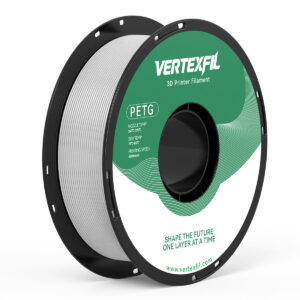


PETG (Polyethylene Terephthalate Glycol-modified) is a popular engineering filament that combines the easy printing characteristics of PLA with improved durability and strength.
PETG has become one of the most popular choices for users who need stronger parts without moving to advanced materials like ABS.
Advantages of PETG
1. Better Strength and Durability Than PLA
Compared with PLA, PETG offers:
- Higher impact resistance
- Better layer adhesion
- More flexibility
- Improved durability
This makes PETG suitable for functional parts.
2. Better Heat Resistance
PETG can withstand higher temperatures than PLA, making it better for:
- Mechanical parts
- Tool holders
- Outdoor components
- Industrial prototypes
3. Good Chemical Resistance
PETG has good resistance to:
- Moisture
- Chemicals
- Environmental exposure
Disadvantages of PETG
PETG is slightly more challenging to print than PLA.
Common issues include:
- Stringing
- Surface imperfections
- More sensitivity to printing settings
Proper temperature and retraction settings are important.
Best Applications for PETG
PETG is recommended for:
✅ Functional prototypes
✅ Mechanical components
✅ Storage containers
✅ Outdoor parts
✅ Mounting brackets
✅ Replacement parts
What Is ABS Filament?
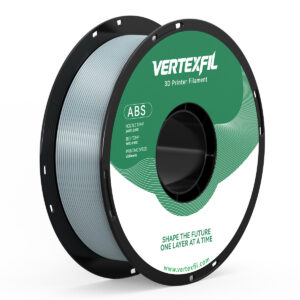

ABS (Acrylonitrile Butadiene Styrene) is a traditional engineering plastic widely used in industrial manufacturing.
ABS is known for excellent mechanical strength, impact resistance, and high-temperature performance.
Advantages of ABS
1. Excellent Mechanical Properties
ABS provides:
- High impact resistance
- Good toughness
- Strong structural performance
It is often used for parts that need to withstand stress.
2. High Heat Resistance
Compared with PLA and PETG, ABS performs better in high-temperature environments.
ABS is suitable for:
- Automotive components
- Electronics housings
- Industrial applications
3. Easy Post-Processing
ABS can be:
- Sanded easily
- Acetone vapor smoothed
- Painted
This allows users to create professional-looking finished parts.
Disadvantages of ABS
ABS is more difficult to print because it has:
- Higher warping risk
- Stronger odor
- Need for better ventilation
- Higher temperature requirements
A heated bed and enclosed printer are recommended.
Best Applications for ABS
ABS is suitable for:
✅ Automotive parts
✅ Functional prototypes
✅ Electronic cases
✅ Industrial components
✅ High-temperature applications
PETG vs ABS vs PLA: Strength Comparison
When comparing mechanical strength:
ABS > PETG > PLA
ABS generally provides the highest impact resistance.
However, strength is not the only factor. Print success and reliability are also important.
For everyday functional parts:
PETG often provides the best balance between strength and ease of printing.
For decorative models:
PLA remains the best choice.
For industrial applications:
ABS is often preferred.
PETG vs ABS vs PLA: Which Filament Has the Best Print Quality?
For print quality:
PLA > PETG > ABS
PLA produces the cleanest surfaces with the least effort.
PETG can achieve excellent results with proper settings.
ABS requires more experience because of warping and shrinkage issues.
Which Filament Should Beginners Choose?
For beginners:
Choose PLA if you want:
- Easy printing
- Beautiful colors
- Reliable results
- Minimal troubleshooting
Choose PETG if you want:
- Stronger parts
- Better durability
- Functional models
Choose ABS if you need:
- Maximum heat resistance
- Industrial performance
- Engineering applications
PETG vs ABS vs PLA: Final Recommendation
There is no single “best” filament. The right choice depends on your project requirements.
| Your Goal | Recommended Filament |
|---|---|
| Beginner 3D printing | PLA |
| Colorful models | PLA |
| Functional parts | PETG |
| Outdoor applications | PETG / ABS |
| High-temperature parts | ABS |
| Industrial prototypes | ABS |
| Balanced performance | PETG |
For most users, PLA is the easiest starting point, PETG is the best all-around upgrade, and ABS is the choice for demanding engineering applications.
Explore High-Quality PLA, PETG, and ABS Filament
At Vertexfil, we provide reliable 3D printing filament with consistent diameter tolerance, stable extrusion performance, and a wide range of colors for hobbyists, makers, and professional users.
Whether you need PLA filament for creative projects, PETG filament for durable functional parts, or ABS filament for engineering applications, choosing the right material helps you achieve better printing results.
FAQ
Is PETG stronger than PLA?
Yes. PETG generally provides better impact resistance and flexibility than PLA. However, PLA can be stronger in terms of rigidity.
Is ABS better than PETG?
ABS has higher heat resistance and toughness, but PETG is easier to print and has lower warping risk.
Which filament is best for beginners?
PLA is the best filament for beginners because it is easy to print and requires minimal setup.
Can PETG replace ABS?
For many applications, yes. PETG provides good strength and durability without the printing difficulties of ABS.
Which filament is best for outdoor use?
PETG and ABS are better choices than PLA because they have better weather and heat resistance.
Meta Description:
Compare PETG vs ABS vs PLA filament in strength, durability, heat resistance, print quality, and applications. Learn which 3D printing filament is best for your project.